We have been told that going electric will help save the planet by reducing emissions, but can we be so sure that mining rare minerals is better?
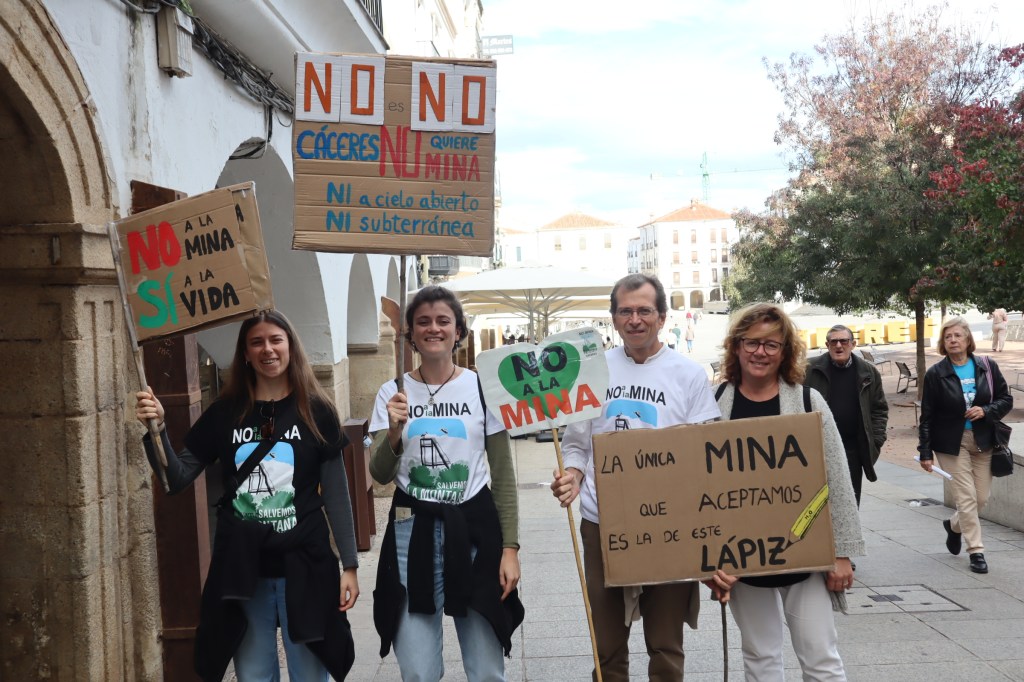
On Sunday 10th November, I was having a café con leche in the main square of Cáceres, a UNESCO World Heritage Site in Extremadura, when I witnessed the protest against the proposed lithium mine. Impassioned roars of ‘NO A LA MINA’ could be heard amid the violent beating of drums, whilst hundreds of the city’s locals contested, what they feel, could be an environmental catastrophe. I ditched my coffee to get closer to the action and was approached by a creepy gas-mask-clad Cacereño. They handed me a flyer listing as many as nine reasons against the site, said to be only 600m from the city’s residential area. I just wanted to know what the lithium would be used for.
The San Jose Lithium Project, 75% of which is managed by a subsidiary of Australia’s Infinity Lithium, intends to restore a previously-used mine to unearth and process lithium hydroxide. This would contribute towards The European Battery Alliance’s goal of creating a European battery manufacturing chain, ultimately to steer away from a dependence on Asia. One of the main by-products will be the environmentally-friendly electric vehicles (EVs), whose batteries contain approximately 8 kilograms of lithium, according to the World Economic Forum. The mine would serve as great relief to the global anxieties regarding lithium supplies in comparison to the rising demand, with Infinity Lithium projecting the Spanish site as the second-largest deposit in the EU. The multinational company insists that the project would improve levels of unemployment, through the creation of 4,000 direct and indirect jobs and sourcing 80% of their workforce from the local community. Furthermore, they would take advantage of Extremadura’s plethora of solar-powered energy by using electric machinery to reduce their CO2 emissions.
While the Australian minerals company attests its commitment to sustainability, Salvemos la Montana de Cáceres (Let’s Save the Mountain of Cáceres) argues otherwise. The group is a citizen’s association born 4 years’ ago to protect the future of the city and, in conjunction with the creation of labour, they state that the project would starve the community of money in other areas. Salvemos la Montana says the subsidiaries use public funds which could alternatively be used to improve the lives of individuals. The San Jose Lithium Project could also threaten the city’s UNESCO status, negatively affecting the tourism industry. Alongside destroying the mountain, a site of religious and cultural significance, they maintain that the project would damage public health due to the use of contaminative gases, toxic substances, and heighten noise pollution. Finally, it would demand more water than is available in what is already a hot and dry segment of Spain. Wetlands International, a European organisation seeking to safeguard water supplies, claims that 2 million litres of water is required for every tonne of lithium.
Being from a country whose government has solemnly vowed to ban the sale of new diesel and petrol cars by 2035, I had mindlessly painted electric vehicles with the same shade of green as reusable coffee cups. But, the roars of the Cacereños have cast a shade of doubt on my mind. While I don’t disregard the relative sustainability of EVs, I think more research is required to fully grasp the ramifications that mining such natural resources involves.
 Folk & Fauna
Leave a comment