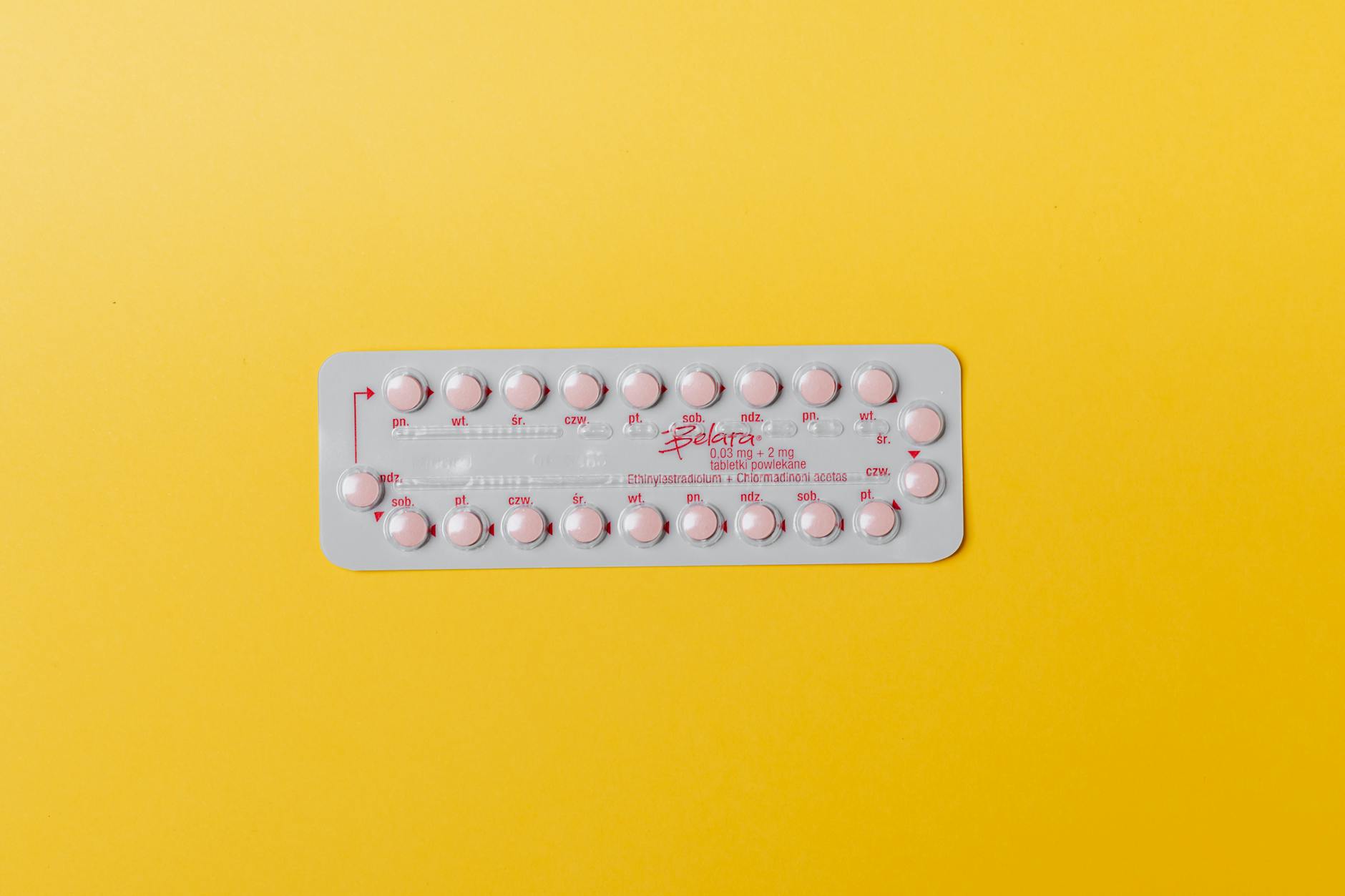
Following the overturn of Roe v. Wade, Clarence Thomas, associate justice of the U.S. Supreme Court, wrote that the court should reconsider other cases, such as Griswold v. Connecticut, which established the constitutional right of married couples to access birth control. Contraception is a reproductive right; it is significant for the empowerment of women, and such a statement exposes its vulnerability.
Use of birth control has been documented since the ancient Egyptians, Greeks, and Romans, though they were not entirely effective or safe. Traditional methods include spermicides made from crocodile dung, oral contraceptives such as copper salt (toxic), or juice made from silphium, a plant deriving from North Africa. Extended breastfeeding and withdrawal (probably the most effective of the time) were heavily relied on. Condoms made from animal or fish intestines and bladders have also been recorded as early as 3000 B.C. It seems people get quite creative when they are desperate.
Traditional methods used by indigenous populations in the U.S. influenced modern birth control methods; most notably, the progesterone required for the development of ‘the pill’ was extracted from a compound called diosgenin, found in wild yam that Mexican women had been using as a preventative for centuries. Up until the 1900s in the U.S. and Europe, variations of herbal remedies, condoms, diaphragms, and injectables were used. Adversely, religious institutions condemned the use of all forms of contraceptives, deeming them as unnatural and instead undergo abstinence to prevent pregnancy, though this advice was repeatedly ignored.
In 1953, Margaret Sanger, with funding from Katharine McCormick, set hormonal biologist Dr. Gregory Pincus the task of developing an affordable oral contraceptive pill. Collaborating with Min-Chueh Chang and fertility specialist Dr. John Rock, it proved to be a success. Despite largely unethical clinical trials, “the pill” (as it is colloquially known) passed approval from the FDA (Food and Drug Admission) on May 9th 1960, however The Comstock Act was upheld to outlaw its distribution for contraceptive means. Five years later, The Griswold v. Connecticut case led to the landmark decision by the Supreme Court, ruling that married couples had the right of marital privacy to use contraceptives. As a result, the pill became the most widely used form of contraception in the U.S., which was advanced by the 1972 ruling that legalised the use of birth control for unmarried women. The IUD, implant, and emergency contraceptive pill soon followed suit and became popular methods of family planning across North America and Europe.
Despite unfavourable rulings from religious leaders and nation states, women across the globe continue to have a strong demand for birth control. Based on a UN study published in 2019, 922 million women of reproductive age around the world rely on contraception, and a further 190 million have an unmet need.
In lower-income countries, where there are the highest levels of unmet need for contraception, there are the lowest levels of female literacy. According to the UN’s 2019 study, Sub-Saharan Africa had the lowest rates of modern contraceptive use (24%) and demand satisfied (52%). In correlation with this, this region has also been recorded as the most difficult for girls to receive an education, with 9 of its countries consistently ranked in the top 10 toughest places for girls’ education in the world. In addition, lower rates of female literacy often correspond with higher levels of poverty and child marriage.
I think it’s fair to say that women’s roles within society are traditionally characterised by her ability to reproduce, to care for and raise children. Alternatively, the position of breadwinner to provide for the family is typically assigned to men. Some people are happy with this arrangement, but not radical feminist Shulamith Firestone. She argued that a woman’s reproductive ability makes her dependent on a man and that contraception allows for greater equality as it offers her the choice of when or if to reproduce. Birth control is widely seen as allowing a woman more autonomy, and time, to focus her efforts within the labour market and to gain financial independence, if that is what she wants.
Aside from this, contraception has been revered for liberating attitudes towards women’s sexuality. In tandem with the second wave of feminism during the 1960s and 70s, the Sexual Revolution gained precedent in the ‘West’. The availability of birth control, such as the pill, presented the possibility of having sex for non-procreative reasons, leading to the idea that it can and should be something to be enjoyed. This was accompanied by feminists’ opposition to the ‘double standard’, referring to the concept that it is acceptable for men to engage in sexual relationships outside of marriage but not for women. What’s more, views on marriage also radically changed during this period, due to both the growing rates of divorce and the increased acceptance of premarital sex. The sexual revolution can be seen as broadening the scope of women’s identity beyond ‘wife’ or ‘mother’.
It is feasible to claim that if the U.S. Supreme Court can overturn Roe v. Wade, it can overturn Griswold v. Connecticut. If this happens, what message does this send to the rest of the world about reproductive rights? Women have been trying to prevent pregnancy since the dawn of time, and shouldn’t they have the right to? What’s more, will a simple court ruling stop them from trying?
 Folk & Fauna
Leave a comment